Quality Level D
Level D — Records & Information
Existing records, as-builts, and verbal data. The starting point — useful for planning, never trusted alone.
When to use it: Early feasibility, alignment studies, scoping budgets.
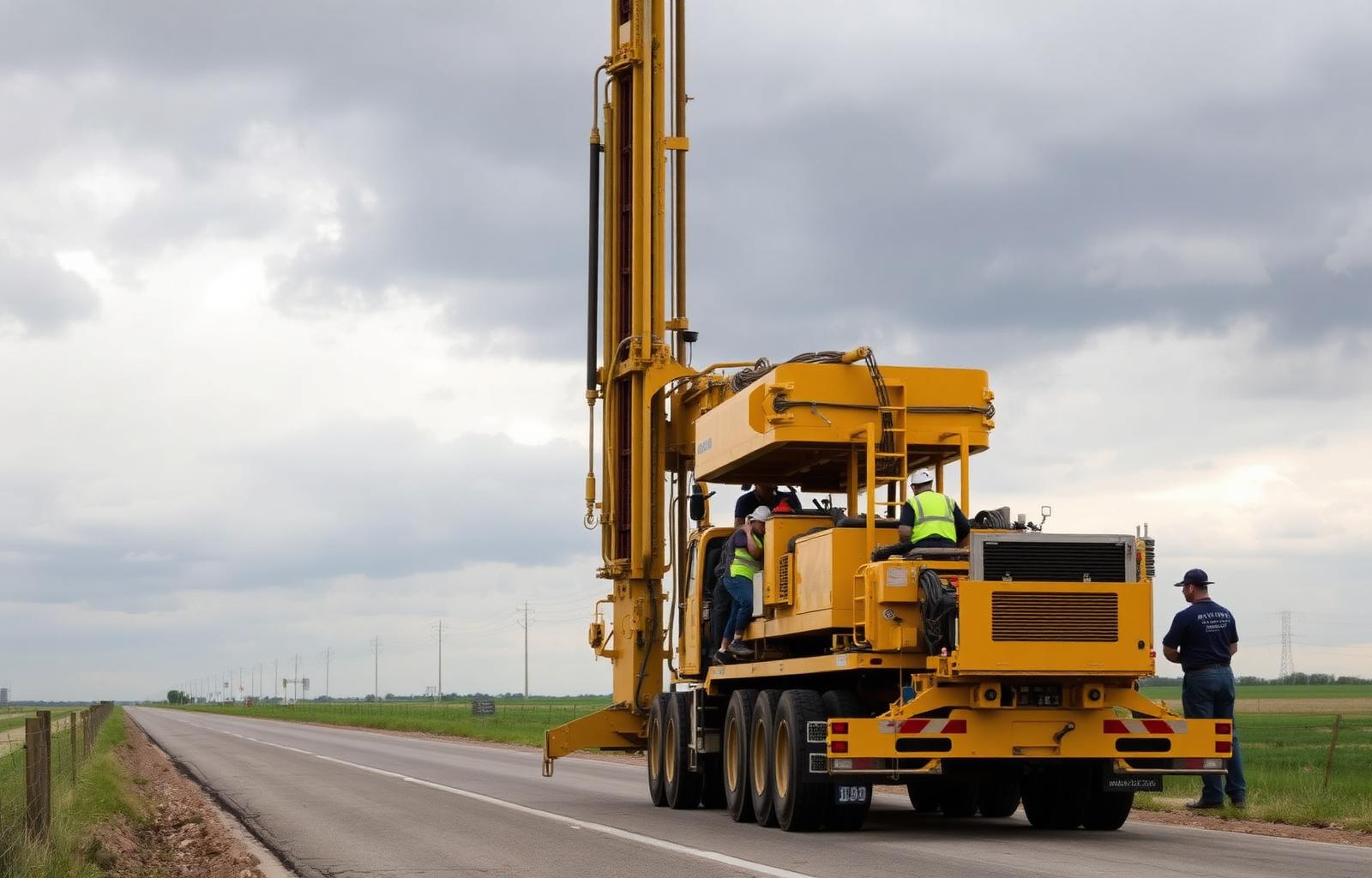
Subsurface Utility Engineering is the discipline of finding what's underground before you design or dig. The ASCE 38-22 standard defines four quality levels — here is what each one actually means, and when to require it.
Every utility strike, redesign, or change order on an infrastructure project starts with one of two things: bad data, or no data. SUE replaces guesswork with engineered, signed information about the utilities already in the ground.
ASCE 38-22 is the American Society of Civil Engineers' standard for classifying that data into four utility quality levels — D, C, B, and A — from lowest to highest reliability. Specifying the right level in the design contract is how owners control underground risk before the first crew mobilizes.
CSL Consults LLC, an MBE/DBE-certified engineering firm (Texas Firm No. F-29543), specifies and oversees SUE on utility, fiber, telecom, and data center programs across Texas, Arizona, and New Mexico.
Existing records, as-builts, and verbal data. The starting point — useful for planning, never trusted alone.
When to use it: Early feasibility, alignment studies, scoping budgets.
A surface survey of visible appurtenances (manholes, valves, pedestals, markers) correlated to Level D records.
When to use it: Conceptual design and corridor planning where buried utilities are not yet a design driver.
Geophysical locating — electromagnetic induction and ground penetrating radar (GPR) — to horizontally place utilities on the design plan with two-dimensional accuracy.
When to use it: 30%–60% design, route engineering, fiber and conduit alignment, HDD corridor screening.
Vacuum-excavated test holes expose the utility. Size, material, condition, horizontal position, and depth are measured directly and tied to survey control.
When to use it: Final design, HDD entry/exit and bore profile validation, conflict resolution, critical tie-ins, and high-consequence crossings.
Most projects do not need Level A on every utility — that would be expensive and unnecessary. The discipline is matching the level to the risk on each segment of the work.
A Texas-licensed PE on the CSL team reviews every SUE scope, deliverable, and conflict matrix before it goes to construction.
We'll scope the right mix of Levels D, C, B, and A for your corridor — and stand behind it with a PE-stamped deliverable.